Showing posts with label e-Communication. Show all posts

Tuesday, May 16, 2017

Overviewing eComm

Wow. High School is done for me.

eCommunication helped get me where I am now, and I'll be forever grateful for it.

Seriously, I can still remember the first day I stepped into the eComm room making a Keynote animation, thinking I'll never make it through. But here I am now, endorsed and ready to make animation my career of choice. I wouldn't have been as confident or as sure of myself without the people or the experiences I have had in this classroom setting. Basically, without collaborating or communicating with my peers, I wouldn't have learned as much as I did.

Technology

I learned how to time animations with 2D and 3D engines (Photoshop, After Effects, Maya), as well how to utilize Adobe products to help improve upon the initial project. I learned through trial and error as well as tutorials over what exactly I wanted. Of course I faced challenges (mostly crashing the networks) but it was important to me so I could learn what I needed to improve on for the future.

Collaboration/Communication

For me, this goes hand-in-hand, as my projects couldn't have been as good as they were without the constant inputs from my friends around me, giving me advice over art, flow, story, or scene ideas. Again, through trial and error, I learned through other people. Challenging aspects were trying to decide when I wanted vs what was better for the project at hand.

Project Management

I learned how to manage my time due to dates for eMagine, as well as stuff done for Netterville. I learned it through much struggle of meeting due dates on time and wanting to make the best work I could. It is vital to learn this skill for the future due to me wanting to be an animator for Disney (have very strict deadlines)

Strengths/Weakness

My strength, I believe is that I give effort to each project and I do them on time. (Thankfully my art has also improved since freshmen year as well). While my weakness is probably having inconsistent styles, which is something I'm improving on, but it's still a work in progress. With this new knowledge, I hope I can further myself for future endeavors. But I wouldn't change a thing. Because without every success/failure I endured, I would be a different person than I am now. And I'm proud of what I am now.

End

Welp, these last 4 years have been a ride. I learned so much that it's weird to go back to my first projects on here and there's a definite improvement. I'm proud of myself, and I can't wait to see myself continue to improve. Thank you Netterville, and thank you eComm for making me what I am now.

Tuesday, December 20, 2016

Professional Article Review: Doctor Strange's "Strange Effects"

Purpose of the Article:

The article discusses the laboring process of making the strange effects of the magic within Doctor Strange. The author also explains the inspirations behind the effects behind bending and twisting reality in the movie were similar effects used in Inception, and that the process of making, creating, and implementing the methods to create Doctor Strange. They use the evidence of both speaking to the VFX production supervisor, having watched the movie, and the supervisor explaining what they did on previous projects that helped create Doctor Strange's world. The strengths of this article is the feeling that this person who wrote it is generally interested in how Doctor Strange's animation was created, and having some evidence to back it up. But that is also is a weakness, as the author only really has one reliable source for his article so there's nothing else really backing up his claims. The author seems to conclude with saying that the impressive animation was created by the tenacity of the people involved, who worked with similar deadlines in Guardians of the Galaxy

My Own Conclusions:

Generally, my critique of the article is that even with the only resource being that supervisor, I found the article sound and informative. It is interesting to see the time and effort and thought that went into scenes of Doctor Strange like the final battle with Dormamu. It is significant due to the need to show others how exactly the movie was as spectacular as it was. The argument stands up on its own to display the work that went into the movie and the methods used to achieve the effects. The evidence is convincing as well if one of the main head honchos behind the effects agrees with it. I believe these effects inspire me as an animator to see what others can achieve in deadlines like 6 months. I honestly understand most of the article, as the author took the time to explain what each difficult term meant and the reasoning behind his writing. So all in all, it is a well written work attributing the credit for the animation to the people who deserve it. Well done Disney, yet again!


Read the Article for yourself! Link

Professional Project Review: Shelter

The Project:

Shelter was a collaborative piece from an American music producer, a French Music Producer, Japanese animators, and distributed by CrunchyRoll. This was made as a music video for Porter Robinson and Madeon's song "Shelter", which was released on August 11th, 2016. It was then announced that both the producers had been working for over a year to create a music video with a story and plot to accompany the music. So it was released on October 18th of the same year to large success, as the deep, emotional story connected with the music as if both were made for each other. The hand-drawn animation looks beautiful, as the backgrounds and environments created are gorgeous and inviting.

The Story:

The story follows a 17 year old girl (named Rin in the description) who lives alone in a simulated reality, which she controls by drawing on a tablet to shift the reality on what she wants. She then discovers scenes that she didn't make and discovers (through flashbacks, newspaper articles, and past memories) she was once a child in Tokyo who lived with her father. But Earth was about to be in collision with an object the size of the moon. So her father, while still being loving towards her, built her a ship with life-support system for Rin to escape the doomed Earth. So she has been in space for the past 7 years, waiting for someone to make contact with her. At the end, a message comes up as Rin vows to make her father's sacrifice worth it.

My Thoughts:

I honestly love the animation to bits, as it was gorgeous to follow the story. I would want to apply the interactions of the environments to my own work, as it looked fluid and clean to me. I believe the shifting backgrounds and different angles for camera shots are applied well to this piece (which I've done before). The creators did well to have an animation serve the story and song justice so it was explained well, but they could improve upon maybe the ending. The ending was a bit confusing and left up to interpretation on how Rin will handle the message received at the end. But overall, I loved it. It was so beautiful and nearly had me in tears at the end of it. I recommend anyone to watch the differences between American and Japanese animation, as well of the power of collaboration between all these different people.


Friday, December 16, 2016

Semester One: Done!

Magical Mischief: The Project Summary

The semester project that I've been working on had finally concluded in a timely manner. My animation, the sound effects, the music, and even credits were done in the past week and I feel proud. I believe my quality of animation has improved since Midnight Flight, and I added a story element previously missing from the previous animations beforehand. I followed the storyboards more than my previous venture, added as well as subtracted scenes that would either hinder or help the animation win the coveted Pixel at eMagine that I desire. I observed various different animation styles over the course of the semester, such as the scene of the boy's toy flying through the desk utilizing the ability to put in 3D elements in a 2D animation. I enhanced my hand-drawn elements by adding a hand-drawn background painted in photoshop, so it has more definition in both characters and backgrounds. I pt more detail into my characters as well due to the comments from last year that my characters were not that detailed or visually interesting.

What to go from here:

I hope to make another project to implement more 2D elements for another fun project like this (probably if anyone knows me, involving dragons again), maybe another short story animation. Perhaps even adding more complicated elements into it to maybe get two Pixels at the same time (like my goal I set for this year). Hopefully I can get another decent idea to try and attempt before this year ends and I can start ASAP.  The Story-Boards below are sections of what I did to animate for my project.


 My animation: https://www.youtube.com/watch?v=tcFPttYzfIE

Tuesday, October 11, 2016

New School Year, New Project: My Own Sorcerer's Apprentice


To Boldly Try What I Haven't Tried Before

Why this project and idea?

One of my favorite animations growing up was the Sorcerer's Apprentice section from Fantasia, as I loved the thought of mischievous Mickey Mouse messing with magic, only for him to lose control of it to get his just desserts. It began my love, I believe, of mythos and magic that continues now.
But also, I wanted to make a more story-driven project compared to last year due to the comments and concerns given to me last year from my project entered into eMagine. Also, I wanted to try to animate a human character alongside a creature this time, taking more time to make them look decent and realistic.
The main reason, however, is to show that I could accomplish this project in it's entirety, and not procrastinate and make something that could be both cute and cool.

The Scope:


Beni
I plan to have three characters; Beni the Apprentice, Keiter the Senior Wizard, and Austie the creature companion of Beni. Beni is an apprentice wizard who is powerful, but very untrained in magic. Keiter has to leave to gather more supplies to a potion, and cautions his charges to not practice anything while he's gone and leaves. But Beni decides to entertain himself by flying a small dragon toy around the room, which hits a glass jar containing a fairy. It escapes and now Austie and Beni now have catch it before their master gets home.
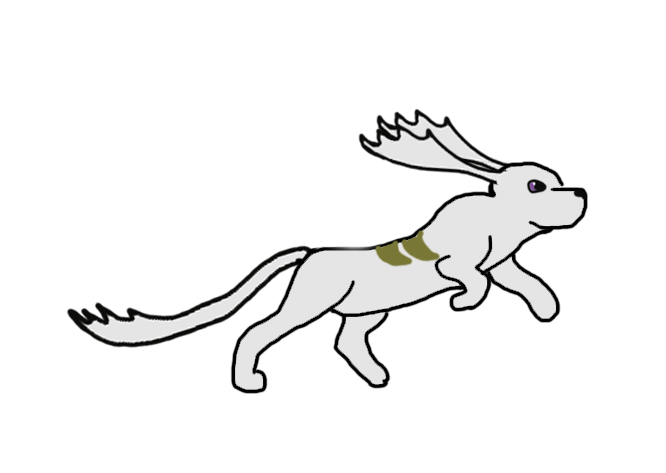
I do have walk cycles completed for both Beni and Austie, as well as a run cycle for Austie that I will display here. I am currently working on the backgrounds and sets as well as the other scenes. The links to the tests are Austie(run), Austie(walk), and Beni.
Austie

Conclusion 

So far, where I'm at for this project, I'm confident in my abilities to make this coherent story as best as I can make it. It's both exciting and exhilarating to attempt a project at this scale, and I am hopeful to pull off my best animation so far within the program! So for now, I will continue to create new animations to try to wrap the story together.

Thursday, May 19, 2016

End of the Line (Or Year)

Welp, I guess this wraps things up.

I learned this year that in order to make a project that you will truly be proud of, you have to be able to take criticism for it as well as use your own skills to balance out the help you get from other people. This year I've greatly improved my ability to both know when to step back and let others pull their own weight as well as take leadership if need be. Collaboration projects like the Montage animation that we did for stop motion showed our willingness to work together. But it also showed our inability to be patient and look to make sure things were perfect before actually putting the animation together. I also learned how to crete good flowing animations like Midnight Flight and the start of the Time animation and Itzal. 


I learned by both watching other similar animations on YouTube, in theaters, and on TV. I drew poses for the frames by watching the way animals moved and studying the walk cycles of the creatures. That's how I learned how to do Chucho's walk, which is mixed between a cat and a dog, and was able to create my own spin on how to make him move. I also learned to plan out the animations and storyboard before actually animating. It helped as I was watching behind the scenes to movies, I got an idea for an animation, and I just began drawing out a short story-board to help organize my thoughts.
This has helped me become more confident in my own ability, and grow as an animator. Projects like my Itzal project and Midnight Flight showed me that I could create cute animations with my own ability. I learned the importance of drawing out a story, and it helped improve my work quality. It even got me to win imagine despite my own lack of confidence of my work. The reason why the lessons I learned helped so much is due to the confidence it placed in myself.


Have I improved? Yes I believe so, and I'm able to now tell my skills and the abilities I have to practice getting good at. My greatest strength I would say was my ability to create engaging environments and my attention to detail in the background. One of the comments from an eMagine judges backs up the claim. However, this leads to one of my greatest weaknesses I believe I'm improving, which is my character animation. Yes, I am attentive and detailed for the movement, but the design of the character itself is what normally lacks. It's often that I simplify too much to ease the stress of animating. But slowly I'm improving that fatal flaw in order to make bigger and better projects for competitions next year for eMagine.


Over the summer I'm going to try and develop a new animation, involving new characters more complex than this year's animations. I could also start learning how to make a story animation, which is something I've never done before. I can use the skills I have, plot out the story, maybe even start animating on my own to test out my own skills without help. But I'm also going to try to get an internship to help improve the skills I have. Then I can get professional opinions and even information how to improve myself.


2D rendition of Maya Character
Some things that I wish I could change would be my failure of Maya animation. I designed a character in Maya that was fluffy and for months I tried adding fur to my Maya outline, but unfortunately I didn't know how to make it into the character. My biggest regret was leaving it unfinished and making stupid mistakes on the character like adding stripes, which ruined the look I was going for. I wish that I hadn't ruined and wasted those months of work that I spent trying to make the animation perfect. But since I can't, I can promise myself that I will not let this happen again and I won't give up next time and complete the project I set out to do.


All in all, this year was full of ups and downs in my animating career. I did flops and I even won eMagine, which was an unexpected blessing and it boosted my confidence in my ability. I began animating better each time I started new projects with more improvements upon both the quality and the animation itself. I enjoyed this year thoroughly due to my abilities starting to make a noticeable improvement upon my work. I look forward to the upcoming months to continue to better myself and I can't wait to test and surpass the limits I have now. I loved animation this year and I can't wait for more. So for now, my friends, have a great summer!

Monday, May 16, 2016

Professional Review: The Maker

The Project:

The Maker was a professionally made project by Zealous Creative in order to boost awareness for their own animation studio as well as to show off a fellow artists's creations, including the aforementioned Maker of the tale and the composer of the animation. The summary is that The Maker must race against the clock (Actually an hourglass) to make a very important, beautiful creation before it runs. This project obviously took them several months, maybe even years to complete as the animators had to create the set as well as a camera that would give the animation proper justice.

The Maker

The Stopmotion used in the film is beautiful, fluid, and realistic to the point I believed that it had to be computer animated. Accompanied by the actual animation was a behind the scenes video detailing some of the aspects needed to bring the Maker to its fullest potential. It is crafted delicately and I couldn't find a place where the frames felt choppy or unnecessary. One element I could apply from this animation is that I can use the amount of detail in my own animations in order to give them more life and beauty than I could before, while an element I do know that is inside this animation is that the camera had to capture every movement in every frame in order to create the illusion of movement for the animation, like in the Stop-motion project given to us at the beginning of the semester.

Based on my observations, the director and animator did beautifully on creating a life-like, beautiful little world with characters with personality even though neither speak. This work could improve on, however, its story telling abilities, as I had to watch it a few times before I finally got what the story was in the animation.

Conclusions

I believe that this is one of the pinnacles that could be reached with stop-motion animation, with an environment that provokes thought with characters that could move in and out of their world fluidly so that it doesn't disrupt the backgrounds, or the characters. I hope to one day aspire to goals like these and create realistic moving characters inside an engaging environment. I love this animation to bits and hope that I could be able to do this well at an animation.


Wednesday, May 11, 2016

Tutorial: Head Turn

Head Turning from Profile to Full Front:

My character in the first scene I wanted to turn from looking forward to turn towards the audience. So  I had to learn how to make that turn happen. You have to draw out each frame carefully, starting with the first, middle and end frames. To make it better, add in-between frames to make the character flow better. This could help people learn how to do better 2D animations to help express the movements of their characters, as well as help give an insight into the proportions of the character the turn is given to. Helps people wanting to further developing their characters.
Here is the end test result:

1) Actually Prepare an image.

Have a character that is not too complicated and you've drawn several times that you want to move. It is best with characters with few complicated details in order to achieve this well.

2) Have a picture of your character in profile view and in full front view

This displays the total motion necessary for your character to face from one direction to another. Take note of how you move your own head, or account the animal that animation is based off of. Are they quickly turning in fear? Responding to another character? Take these into account when creating these things.

3) Draw In-between Images

The turn will seem choppy and very unfinished, so draw the midpoint between the profile and full front, the three-quarter turn. Also, keep in mind the proportions of the characters and the features, as it wouldn't look good if the character didn't look consistent. 

 4) Color!

Color is key to making this character look professional. Make it a color that matches the personality of your character and make sure that it is the same for all necessary frames.

Use these resources for more info!


Results:

The results should be a satisfactory, flowing animation of your character turning to look at the audience from looking forward. Use these skills to help make a unique animation instead of using the same position or angle for a project. I will be using these skills to help keep my animations flowing smoothly. These will help define the movements of my character and characters I want to animate in the future.

Wednesday, March 9, 2016

The Life of Death- A Review

The Life of Death: a review


Story:

The story of this short 2-D animated piece was about a spirit of Death of the forest slowly growing to love a beautiful doe and become friends with her, which she then has to teach Death that dying was essentially a part of life. Essentially, this story was to teach the viewer that even though Death is inevitable, as long as one makes their life a memorable one, it could be a happy one.


Process:

It appears as if this animation was made using Photoshop, evidenced by both the background, the look of the characters, and even the movement is somewhat similar to my own animation made primarily in photoshop. Perhaps Adobe Premiere was used to help finalize the project, as the quality of 'The Life of Death' was very well done for a student animation. It appears to have the flow of hand-drawn animations like that of Beauty and the Beast as well as the Lion King, with detail not only given to the characters, but to the entirety of the environment as well.
This story was told through the observant eyes of the viewers, watching a somewhat unusual tale of friendship unfold in front of them.


Elements I would take from this would be the ability to add detail to background, as well as having an outline, as it made everything feel smooth and flow easier, while this project could probably do better at attempting to move the Death character, as some scenes like at the beginning when he was floating, it felt a bit awkward when he moved.

Conclusion:

This was a well-created, student made project that I hope I can one day aspire to. This has movie quality and it drives me to try and create more beautiful animations. This project also reminded me of why I want to be an animator, to not only teach others a moral of the story, but because I want to give life lessons I've learned to others and inspire others to do the same.

"CGI 3D Animated Short HD: "The Life Of Death" - by Marsha Onderstijn." YouTube. YouTube. Web. 09 Mar. 2016.

Tuesday, March 8, 2016

A Midnight Flight- Behind the Scenes

The Entry

This animation would be the first time I would try my absolute best to get a Pixel at eMagine, I decided when the concept first came to paper. This would be the animation where I could show off what I've been learning for the past two years, and where I can finally show people that this is the career I want to follow. Chute, this small green dragon, would become my personal Mickey Mouse.

The Story Behind the Animation:

Chucho's story began as a sketch within a sketchbook, a single doodle that soon grew into two, then ten, and then a hundred different drawings of this same character. I just knew that I had to bring him to life, as he was the first character I kept drawing repeatedly. So I found an animation online called Reversal of the Heart, an animation revolving around dragons that I took inspiration from. The details of some scenes are actually my attempts to do the creator of Reversal of the Heart's own style of detailed backgrounds. So I decided that this animation, that I would hand draw frames and walk cycles and tests, would be a simple concept. This little dragon would wake up in his cave and decide to got out in the peaceful night in order to take flight, therefore, ' A Midnight Flight.'  I had always liked hand-drawn styles better than 3-D, despite the benefits given to 3-D animators. I also attempted to put in influence from Lilo and Stitch into my animation due to that movie being the reason I want to animate in the first place.

Beginning

It took a week to think of some good storyboards that would pass along to be able to show the scenes I wished to bring to life. So began the attempts of doing plenty of drawings and sketches and tests in order to ensure that everything I wanted to do was doable. Every movement of Chucho was hand-drawn, from his wing movements to his walk cycle to even his ability to blink. The colors of him came from the Slytherin logo from Harry Potter, which I thought would be not only a cool spin on the classic 'dragon',  but a nice little Easter Egg of the preferred house I would be in if I were in the Wizarding World (Unfortunately I'm a Hufflepuff). I created this in Photoshop, painted and drew the backgrounds within the program, some of the animation was done in After Effects, such as the moving when Chucho is flying. The music I gained from Youtube from a game named Ori and the Blind Forest, which i loved playing and felt that this track sounded like it would fit when the animation was made.

Editing

Editing I'm pretty sure one can assume that took awhile, especially in a file with multiple test renders, different animating styles, and even scenes that I had to cut to fit the time period allotted to me. There was well over fifty individual files within the Chucho folder I placed within my desktop, but I brought all of the frames together in After Effects, uploaded a cut version of the soundtrack, and did about 50 seconds of the 1:24 that the song actually was. After six rendering attempts, the project was complete, and I loved this cute little animation. "The Midnight Flight." was the best animation I had ever done before. 

What I learned

I learned about the fundamentals of animating in Photoshop, the benefits of After Effects, how to animate from first person POV, and even how to make a character look like they're flying. Basically, the entirety of the animation was new to me and I enjoy that it was so successful! I couldn't have done it without the assistance of Madison Redmond, Hannah Fales, and Hanna Brady; who helped me make better decisions while animating the project, like having a first person POV in the first place. If I had to do anything different, I would make animated leg movements for when Chucho was flying to make it look more natural. I would keep the type of scenes the same, but add more outlines and define characteristics for the animation background and character. I hope I can make my next animation smoother and better for next time, as well as improving my hand drawn skills for animation. I hope that next time, I can put more Disney-esque influence into the animation, like the old cartoons from the 20s, as I loved those when I was a kid. But I hope to continue down this road of improvement!

Monday, December 14, 2015

Reaching for the Stars

Making the 'Star' of the show


This semester was my first major animation project, to make an animation of my own design and concept in order to test the skills I'd obtained over the past two years. I originally wanted to do an entire animation about this star and its protector trying to find the little star named Sirius after he goes missing, but the scope and magnitude of the project at hand soon made me realize my dream animation would not only be wrought with difficulties, but I would only have time to rig the star completely and model the protector. I believe that was the purpose of this project was to show the difficulties that come with these freedoms I now have to make something entirely original.

Concept

I liked the cute short animations that Disney has done, with normally inanimate objects like something as big as a volcano to a small lamp on a desk. I chose to do a little star, due to the many possibilities I can make with them due to their names and characteristics. The star I made was Sirius, the dog star, which is why I gave my star small dog ears. My original protector character I gave a large, fuzzy imaginary-friend kind of character, as the animation I was going for was a whimsical fun tale that would've interested me as a child.
So I quickly drew them, put them on the computer, and modeled them within Maya. The star was simple to handle. The protector, on the other hand, was challenging. I had originally had fur on his character, with a bunny-like muzzle. Yet the fur tool on Maya was difficult for me to use and couldn't even utilize correctly. So, in a heavy heart, I scrapped the idea for a simpler design of stripes down the sides and arms for him. The protector had a skeleton like that of the star in order to make him move. Using the bone tool, I constructed a custom bone structure for Arcturous (the protector's name), but the types of faces I used had caused problems. So, on both Sirius and Arc, I converted the faces into triangles to attempt to get them to move properly, yet even as I painted weights upon the character, it still didn't move correctly without issue, so I had to abandon my story altogether, with me quickly replacing it with a walk cycle completed for Sirius. I toon-shaded him using the toon color tool within Maya, made him look like a cartoon, and quickly finished the little star walking within the vastness of space. The rendering went without a problem, for once, and I ended the animation in about 49 frames of animated walk cycle.

Lessons Learned

I not only learned abilities to follow specific tutorials within Maya that I hadn't discovered earlier, but I learned how to put in fur within 3-D animations. It was a simple matter of creating an X-Gen file within an animation within Maya, select the type of fur that one would want (custom or premade), and apply it to certain faces upon the character. Getting advice from my peers is something entirely to me, but it surely did help, for when I got stuck within a creative rut, one of them would point out a flaw that could be corrected simply, or even a new idea that helped push me past my stubborn wants for my own animation. They helped me see the flaws within my own work and learn to be more critical of my work. Lastly, I had learned much about the importance of modeling and pre-planning animations, as I went into this animation preparing to learn on the fly and wish to make something good based on ideas made on the fly. I have since been reminded to always plan out what I want to happen within the animation, otherwise I will get lost and lose inspiration from an animation I previously had loved from the beginning.

Same? Different?

I would honestly change the protector's design to closely relate to my star and make it look like he belonged in the same animation with Sirius. The design colors as well, as even some of my peers noticed that the blue stripes down the sides looked similar to those from Tron. But I would keep the concept and the star. I loved everything about them, despite their own individual difficulties I had with them at first.

Epilogue/ Sirius' Last Bow

Generally, this project seemed more of a wake-up call of the difficulties of animation more than anything else. But I did like this project nevertheless. Despite my misgivings about the fur tool, the complete redesign of what I planned to do, and my protector character not working properly, I am very proud of what I worked on throughout this entire semester. I decided for my next project within Maya that I will design them after I had drawn out what I want with them, and that they'll fit the layout design I've planned to make them with. Already, modeling for it is easier the second time around. Perhaps maybe I'll learn to use the fur tool this project, but the skeleton and mesh are much easier to move now that I've considered how my new character will move. I loved this project, as it helped me assure myself to be the best animator that I can be, despite all the misfortunes that may occur. I hope that in the future I will retain the knowledge I have and add to this ever increasing plethora of animation knowledge. Using the new information I learned from this project, I will make my next animation even better.

Sunday, October 11, 2015

The Sweet Tune of Animation

Main Melody (Main Idea)

With the (then current) success of Frozen's soundtrack, it was about the successful nature of many new animated films, such as the Happy album from Despicable Me 2, or Immortals from Big Hero 6. It was about how the soundtrack can make or break a film, how the soundtrack can give the animated feature a new life, and how it can make a movie more popular than anticipated.
The author was arguing mainly for how the music within Disney movies, (as well as some from other companies) can make a film rise to Stardom, the prime example being that of how the new film Frozen's soundtrack outselling the record holder Lion King. He also uses prime examples that are both support that the music can make more money for a movie, like Snow White for it's revolutionary music that set the precedent for all future Disney musicals, to the time where test audiences wished for a completely new track in Pocahontas. He has backed up his sources using other interviews from both Disney employees and DreamWorks as well. However, the main weak point for this argument is that they don't discuss any of the repercussions for bad soundtracks. But another, smaller weak point is that it doesn't focus on any movies abroad, like say Wallace and Gromit, whose soundtrack is phenomenal with the movie. Yet there are several strong points in her claim, by using well known examples and success stories, as this will resonate with a broader audience. There is also the fact that she explained some of the success by using quotes from the directors of some of these films. Her conclusions being that the movie industry is booming with the new advancements and brilliant compositions of music within the film.
I do believe that the argument is important, as the movie industry with all of its advancement from the first animated feature or cartoon with sound, have come to expect pieces that match the story's feel and emotions perfectly. If a film is not up to par with the score, the entire piece, no matter how moving or emotional, will feel off and leave audiences dissatisfied. The evidence seems to be convincing, and I do not see any wide range of ramifications to be made to the argument.
The applications of an animator is that we have to be sure that if we do choose to have music, that it must fit the animation, and it can make or break a movie. But yet what I don't understand is what the author meant by it was odd to hear about how "...it was still considered unusual to make a song-heavy animated film.[in 2006]", as I had thought that other animated features were influenced heavily by its music before that, such as Lion King or Beauty and the Beast.
But now using this knowledge, it helps me realize the importance sound can give a viewer, about how music can help make or break the success of an animated feature. If I were to make a great animation, it is only fitting to have correct score in it as well.


Keegan, Rebecca. "Animated Movies Sing a Happy Tune." Los Angeles Times. Los Angeles Times, 19 Apr. 2014. Web. 11 Oct. 2015.

Thursday, September 3, 2015

The Burning Review: Sintel

F

The Story of Sintel:

Plot

Sintel was a very young redheaded girl. She was homeless and alone until she first saw a baby dragon injured in the dirty streets. Being a kind soul, she takes in the little infant, cares for his injuries, and become very close that she gives him the name of Scales. But one day, when the tiny hatchling was flying on his newly healed wings, a large, unidentified dragon swooped in and kidnapped Scales, leaving Sintel determined to find him and bring him home. Her journey leads her into the cold mountains, deep into dragon territory. There she hopes to be reunited with her long lost companion.


Sintel. Blender Foundation, 2010. Film.

Design/ Focus

Sintel's art style is a 3-D animated movie created in Blender, with detailed features on the main cast, while some of the background characters don't seem to have as much development. An example of this is when Sintel was fighting a thief near the beginning of the animation, her movement just seemed more fluid to me than her adversary. The backgrounds seem to be animated in 3-D as well, unlike some animations in 3-D that I've seen. My Maya animations looked to have similar shadows with the lights like they were. However, the facial features on the humans seem similar to Maya's as well. They weren't flawless, but well made for an independent film made by recent college graduates. Some of the fight scenes at the end, between Sintel and a dragon, weren't as smooth as some of the other fights. But the story endured, and seemed beautiful on its own.

Reviewing Sintel

The emotions of story itself was enduring, at times peaceful, cute, and even a tiny bit tender. But the personalities from the main characters was there in all its beautifully rendered glory. The design for all of them were fantastic and their movement so varied and different depending on their own personality. But the tale being told of how a woman has dedicated her life to search for her friend in spite of the risks and difficulties presented to her was illustrated by at first having her fight an enemy, and then having a flashback to explain the backstory. A mini montage of Scales healing and growing closer to Sintel was mastered perfectly by holding the camera above Sintel's bed and slowly turning around on an axis, with each night Scales growing closer until they are next to each other.
Myself, I would take some of the character development and design with me if I were to work inspired off of this animation. The characters just looked so right with the personalities given to them. I would also take the smooth flying scenes of when Scales and the opposing dragon are flying, as I've wanted to animate a flying animal in Maya for quite some time now. I am grateful that I have learned how to make backgrounds with similar texture, as if I hadn't, creating projects like this would be much harder and more tough to do.


What the Creator did Well: Sintel was full of very vibrant animations of dragons, a chicken chase, and animating so many people at nice in a marketplace scene. Development of the story through the use of light tones and lights for the fond memories that Sintel had of Scales, while the darker pictures later on showed the dark side of the animation. Very well used technique for this short film to showcase the feelings of the protagonist in the intensity and/or brightness of the light.

What Could He Improve: The walk cycles and the water animations could be more fluid, as at times it felt as if the spilt liquid on the floor was just a shape being pulled over a plane. Character walks at times can be stiff, and even rough in a few places. Example is when Sintel was fighting the adult dragon, the dragon's movements looked fine, but it seemed like that  Sintel's were a tad slower than what they should've been.

Concluding Thoughts:

All in all, I loved this animation to bits, not because I love Fantasy, but the simple, yet eloquent story that seemed to stem so easily from this animation. The characters, their designs, the backgrounds, all of it compliments each other nicely. Besides a few minor flaws, the animation seems to be a fantastic rendering of the bond of friendship and how far it can go to save a friend. It wasn't as overly spectacular as How to Train Your Dragon, but was animated just right to be wonderfully enduring.

Link to the Video:

Sintel